
SASO Certification Saudi Arabia – Requirements, Procedure, Documents & Compliance
Saudi Arabia is one of the major trading destinations in the Middle East for manufacturers and exporters. But market entry is not only a question of competitive prices and product quality. Businesses must also be aware of the relevant technical regulations, product standards and conformity assessment requirements. SASO Certification Saudi Arabia is a major consideration for companies exporting regulated products to the Kingdom. The Saudi Standards, Metrology and Quality Organisation (SASO) develops standards and technical regulations that promote product safety, quality and environmental protection. For some products, exporters may be required to meet certain conformity requirements through the SABER electronic platform, depending on the product category. “Understanding these requirements helps businesses to better assess their regulatory responsibilities, maintain documentation and plan international trade activities with greater confidence.
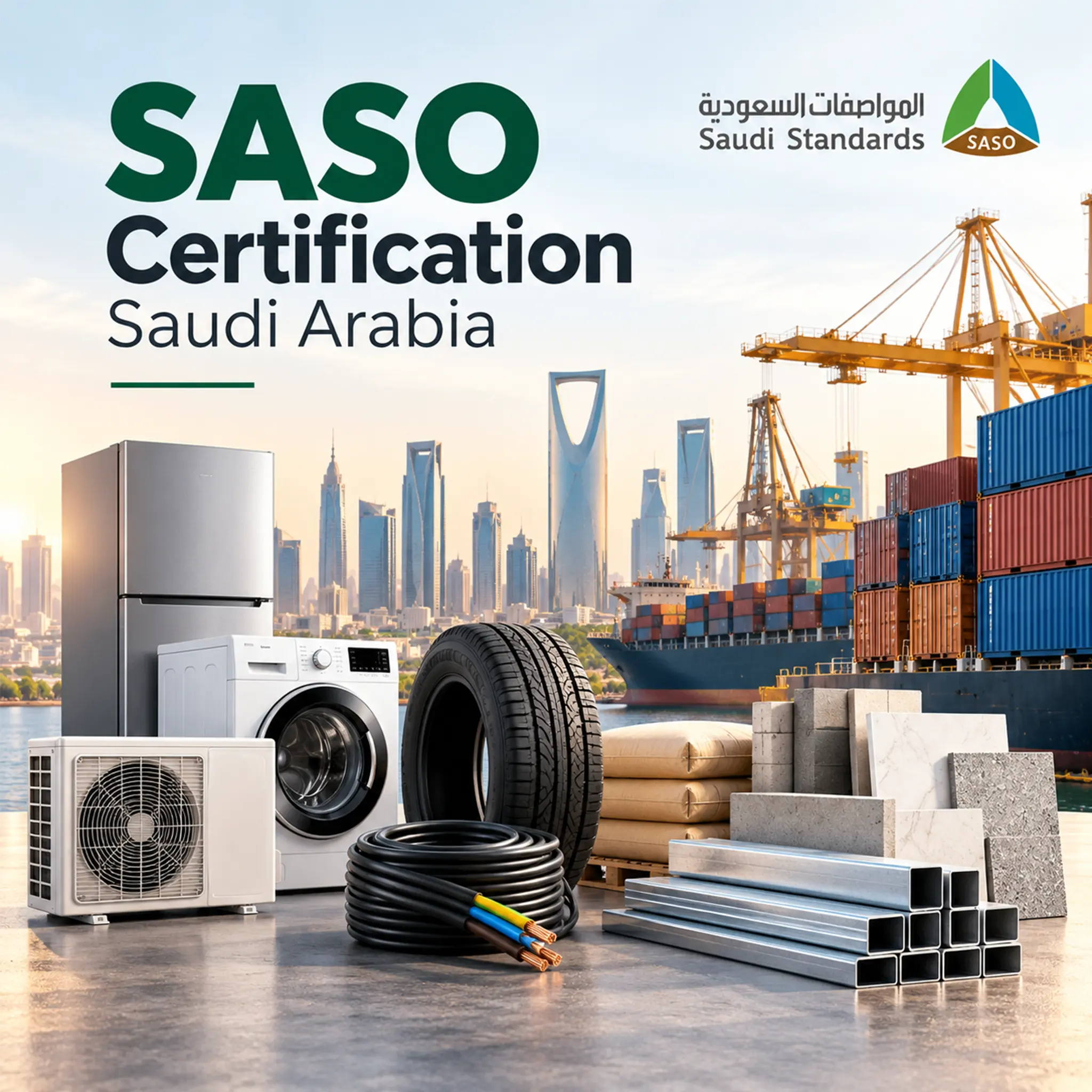
What is SASO Certification and Importance in Saudi Arabia?
SASO is the national standards body of Saudi Arabia. It develops standards and drafts technical regulations and supports conformity assessment activities for a variety of industries. Its work contributes to protecting consumers, improving product quality and increasing confidence in the goods available in the Saudi market.
The term usually used for the conformity assessment requirements for controlled products is SASO certification. The specific requirements will depend on the product category, relevant technical regulation and applicable assessment route.
These requirements form an important part of the planning for international trade for manufacturers and exporters. Products must comply with the applicable regulatory conditions to enter the Saudi market.
The Role of Product Certification in International Trade
Certification of products can demonstrate that goods meet certain technical and safety requirements and thus promote international trade. It also provides evidence that manufacturers have considered applicable regulatory requirements.
Certification can impact a number of areas of business for exporters:
- Market access: Conformity requirements can determine whether a product can be legally imported and sold.
- Product safety: The standards that apply set out requirements for how the product should perform and for protecting consumers.
- Commercial credibility: Documented conformity can improve the trust of distributors, importers and commercial partners.
- Supply chain continuity: Good compliance planning can help to eliminate unnecessary delays with paperwork and shipping.
Certification is not merely an administrative formality. It is one element of a company’s overall philosophy of product quality and international market development.
How SABER Platform Helps Saudi Product Compliance
SABER is an electronic platform for the conformity assessment of products and processing of relevant certificates for products entering Saudi Arabia. Its function depends on the technical regulations and classification of the product in force.
For businesses looking into SABER Certification in Saudi Arabia, it is important to understand that SABER and SASO are related but distinct functions. SASO issues standards and technical regulations. SABER supports the electronic conformity assessment framework.
Understanding Saudi Product Approval Requirements
Saudi Product Approval depends on product classification and applicable regulatory requirements. Some regulated products require a Product Certificate of Conformity, and for certain shipments a separate Shipment Certificate of Conformity may be required.
Other products may have different requirements, including applicable exemptions or alternative assessment routes. Exporters should not assume, therefore, that the certification process is the same for all products.
The relevant requirements depend on the product details, the technical specifications, the purpose of use and the relevant technical regulation. Therefore, correct classification of a product is important to understand the conformity obligations relating to a shipment.
Product Categories and Related Regulatory Requirements
Saudi technical regulations cover many industries. The exact scope will depend on the applicable regulation, the characteristics of the product and the current regulatory provisions.
Potentially applicable regulatory structures may include the following product categories:
Electrical & Electronic Products
Safety, performance, energy efficiency or other applicable requirements may apply to electrical appliances, electronic equipment, cables and other electrical goods.
Automotive products and parts
Tyres, automotive batteries, vehicle components and related products may be subject to conformity assessment under applicable Saudi technical regulations.
Building and Construction Material
Steel, cement, ceramic tiles, insulation materials and other construction products may have specific technical requirements.
Chemicals and Consumer Goods
Certain chemicals, detergents, paints, textiles, toys and household products may also be covered by applicable regulations.
The examples given are illustrative, not exhaustive. The fact that a product falls within a broad category does not mean that every model or every shipment is subject to the same certification requirements.
SABER Registration Process in Saudi Arabia: Everything You Need to Know
The SABER registration process in the Saudi framework offers an electronic pathway to address the relevant product and shipment conformity requirements. The procedure is determined by the product category and the technical regulation applied to it.
The relevant assessment for regulated products may consist of product information, technical documentation, test reports and assessment by an authorised conformity assessment body.
Depending on the relevant route, businesses may have to go through two main certification stages:
Product Certificate of Conformity (PCoC)
Applies to products requiring a product conformity assessment under the relevant framework.
Certificate of Conformity for Shipments (SCoC)
This is used for shipments requiring conformity assessment at the shipment level.
These certificates have different functions. A product certificate is not a substitute for a shipment certificate required by the applicable rules.
Also, the product’s risk classification, the technical regulation and the evidence available to demonstrate conformity may influence the assessment. Therefore, exporters need to be aware of the relevant requirements before finalising their shipping arrangements.
Associated Documents for SASO Conformity Assessment
Documentation is essential for the evaluation of the product and shipment process. Requirements vary according to the product and the certification route. Relevant records may include:
- Product specifications and technical data sheets
- Laboratory test report(s) (if applicable)
- Photos of products, model details, and identification information
- Manufacturer Exporter Information
- Commercial invoices and packing lists
- Certificates or declarations applicable to the product
- Information on labelling and marking, where applicable
The documents required differ according to the regulatory framework. A test report acceptable for one product category may not suffice for another.
It is also important for consistent product identification across the technical and commercial records. Variations in model numbers, manufacturer details or product descriptions may affect additional review and assessment timelines.
Certification Timelines and Business Planning Factors
Certification time and costs vary, depending on such factors as the product’s complexity, the testing requirements that apply, the availability of valid test reports and the conformity assessment route.
Where product information is incomplete or existing evidence does not sufficiently demonstrate compliance, further assessment may be necessary.
Exporters should also consider the relationship between certification requirements and production schedules, distributor commitments and shipment deadlines. This means that regulatory assessment is an important part of wider export planning and is not an isolated administrative task.
Brand Trust & Compliance Influence
Conformity of the product can affect the way in which buyers and commercial partners assess a business. Companies that maintain the appropriate technical documentation and are aware of the applicable regulations contribute to increased transparency in the supply chain.
Regular compliance practices can also lead to better relations with importers and distributors. They may also help the company’s reputation for quality and as a responsible player in the market.
However, certification should not be viewed as a blanket assurance of product quality or as a replacement for ongoing regulatory oversight. Requirements change. Businesses need to consider the rules that apply to their products and the markets they want to sell to.
Why Saudi Import Compliance Matters for Export Companies
Saudi compliance certificate is not just a certificate. This includes knowledge of applicable technical regulations, accuracy of product information, compliance with applicable conformity requirements, and consistency of shipment documentation.
Regulatory awareness can help manufacturers, exporters, importers, laboratories, and conformity assessment bodies better coordinate for businesses looking to export to Saudi certification markets.
Companies operating in multiple international markets may also face the challenge of managing different standards, documentation formats, and approval processes. These responsibilities make regulatory knowledge an essential part of international business planning.
ERA Global Standards Certification is part of the wider field of product certification and regulatory compliance, where knowledge of market-specific requirements is essential to assist companies engaged in international trade.
Conclusion
SASO conformity requirements are crucial in regulating products entering Saudi Arabia. The Kingdom has established a framework of technical regulations and standards and the SABER platform to support product safety and quality.
Understanding the route to certification, the documentation required, and the obligations on shipment can help manufacturers and exporters to plan better and facilitate smoother trade operations. As regulations evolve, accurate technical records and monitoring of official updates continue to be important elements of sustainable market access.
ERA Global Standards Certification provides information and assistance about international product certification and regulatory compliance. To find out more, visit eraglobal.co.in/about/